The bad influence of school.

January 17, 2012

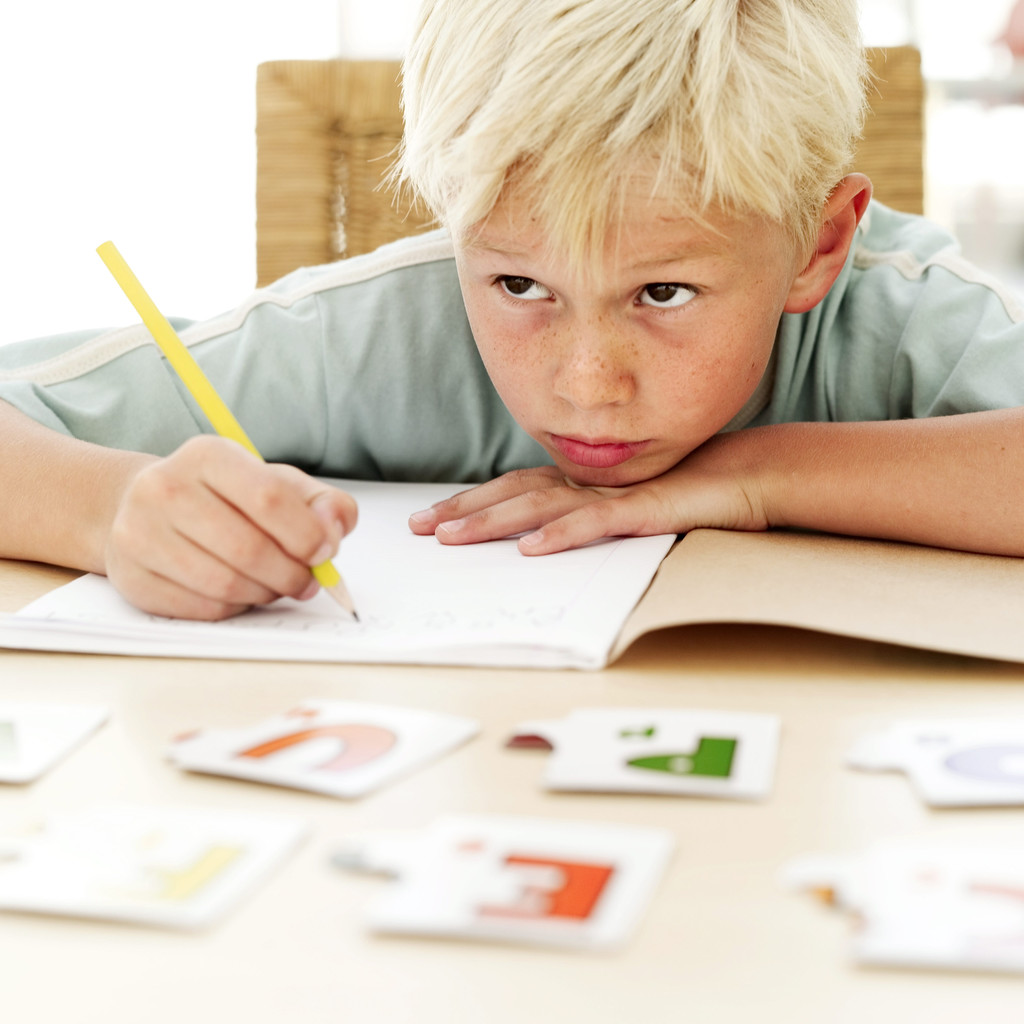
My child has now been at school for four months, meaning he is spending more time away from the family home than he has ever done before. This means, of course, that he is more prone to influences other than those he encounters at home.

Now I don’t mind him coming home announcing that he’s Darth Vader and I’m dead. I don’t mind that I’ve had my first ‘all the other children do’ (in this case in relation to bags of crisps in lunch boxes). But what I do mind very much is that last night he helped me tidy up some crayons, then asked me if he could have a reward for helping. Aaargh!! The horror, the horror!

If you haven’t already read them, my previous posts, “What’s wrong with rewards?” and “Sticker crazy!”, will fill you in on my position here. But to summarise, here are six reasons why I don’t use rewards:

1. Rewards teach a child to focus on self gain.

Quite simply, rewards encourage a child to think of things in terms of what’s in it for them – self interest.
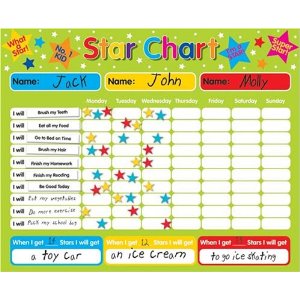
2. Extrinsic motivation sabotages intrinsic motivation.
When we reward a child with motivators like chocolate, stickers or special outings, we increase their extrinsic motivation, and studies have shown that as this increases, intrinsic motivation decreases. Intrinsic motivation is the type we want them to have as it represents a true commitment to something, not a superficial interest merely as a means to an end.

3. Rewards encourage a child to focus on parental approval, not on the effect of their behaviour on others.
For example, when a child is rewarded for sharing, this shifts their focus to the approval of their parent, and away from the effect their behaviour has had on whoever they are sharing with.

4. Rewards model undesirable behaviour.
Let’s not kid ourselves, rewards are basically bribery. At any rate they represent someone using manipulative methods to produce a particular behaviour. This is not the type of behaviour I wish to model for my child.

5. Rewards create an environment of conditional acceptance.
It’s all very well telling ourselves how delighted our children are when they get a reward, but the flip side is how do they feel when they don’t? Like they’ve failed, let us down, aren’t good enough, and are unaccepted, unloved…..These are all possibilities I would put forward.

6. Rewards are often used to bring about a change to a child’s behaviour which benefits the adult, without addressing a child’s underlying need.
A parent might start a reward chart to try to encourage a child to, say, stay in bed. But a child’s behaviour is telling us something, expressing a need. A parent needs to get to the bottom of this and find ways to address it. Rewarding the problem away is simply brushing it under the carpet, to re-emerge in the form of another unwanted behaviour.

I always knew my child would be subject to these ill considered reward systems when he went to school, so this isn’t exactly a surprise. It just makes me sad to see my child, with his natural good nature and inclination to please, doing something with an ulterior motive like this.

I am still trying to come up with a good response, as I anticipate this will not be the last of such incidents.


Choices

January 12, 2012

There are no step by step guides, no rights and wrongs, no quick fixes or easy solutions when it comes to parenting, especially, I find, when it comes to parenting without the use of rewards or punishments.  It’s really about strategies, having lots of them up our sleeves, and judging the right time to use them.

One strategy I find I use many times every day is that of giving choices.  This has been an essential tool for me when it comes to gaining the cooperation of my control-crazy child.  “Just tell him” just doesn’t work.  It’s a red flag to a bull, an open invitation for power struggles and day long conflict.  Here are some examples:

Instead of “Come and put your shoes on”, try “Where are you going to sit to put your shoes on?”

Instead of “Brush your teeth and put your pyjamas on”, try “Do you want to brush your teeth now or in your pyjamas?”

Instead of just making his meal, give him a choice; “Do you want pasta or potatoes today?”

Instead of “Time to get out of the bath”, try “Are you ready to get out now, or would you like two more minutes?”

Open ended choices, however, I avoid;  “What would you like for lunch?”, followed by a list of suggestions, is usually followed by a list of “No”s.

All sound a bit tedious?  It can be!  And my neighbours may attest to hearing me on occasion yelling at the top of my voice “Oh for God’s sake just put your pyjamas on!” or similar, especially towards the end of the day.  However, overall, I’d say it’s a lot less exhausting, unpleasant, and remarkably quicker than the “just do what I say” approach.  Power struggles can be time consuming as well as exhausting and unpleasant.  Those two extra minutes in the bath are nothing compared to what could have been.

Some parents worry that giving choices leads a child to expect them all the time and means they will never do as they’re told, which sometimes – actually a lot of the time – they just have to. But others assert that the more children feel respected, and the less they get bossed around, the more likely they will be to comply when we let them know they really need to.  Giving choices doesn’t mean complete anarchy.  There are still limits and boundaries.  You’ll notice the examples I gave are all of giving very limited choices.  But there is still a choice, and children appreciate this.

Adele Faber and Elaine Mazlish write in their book “How To Talk So Kids Will Listen and Listen So Kids Will Talk“,

“It might seem inconsequential to ask a child whether he wants a half glass of milk or a whole, his toast light or dark; but to the child each small choice represents one more opportunity to exert some control over his own life.  There is so much a child must do that it’s not hard to understand why he becomes resentful and balky.”

Another great benefit, aside from gaining cooperation, is that choices make children feel respected – they feel that their wishes have been consulted, that they are part of the decision making process, that their feelings are important, and likewise that they are an important and respected member of the family.  All good things for a connected relationship and for a child’s self esteem.


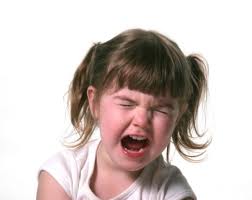
How do you deal with tantrums?

January 6, 2012

Every parent dislikes the dreaded tantrum, but the question of how to respond to a tantrum seems to be somewhat divided.

Many, including some child psychologists and writers, advise that ignoring tantrums is the best way to stop them, on the grounds that children use tantrums to try to get their own way, and will stop having them if they realise they’re not working.  In her book, “What Every Parent Needs to Know“, Dr Margot Sunderland, Director of The Centre for Child Mental Health, adds an extra element.  She writes that as well as this type of tantrum, which she calls a ‘little Nero tantrum’, there is what she calls a ‘distress tantrum’ in which the child is overwhelmed by their feelings, and needs your help.  She advises ignoring a ‘little Nero tantrum’ but comforting a ‘distress tantrum’.  She gives various tips for distinguishing between the two types, but warns, however, that a ‘little Nero tantrum’ can turn into a ‘distress tantrum’.   Hmmm.

Here is my problem with all of this.  First, if there’s a chance that the ‘little Nero’ or power struggle type tantrum can become a distress tantrum, then I’m inclined to hang around just in case.  The idea of leaving a child alone to deal with their feelings, though advocated by many, is not one that I buy into.  Young children have trouble dealing with strong feelings.  This is precisely why they have tantrums.  So how is leaving them alone going to help them resolve them?  Besides, I would never ignore my child when he is crying, for whatever reason, little Nero or not. When we ignore a child who is upset, angry, frustrated, we lose that vital ability to reconnect with them. Ignoring also shows disrespect for him and for his feelings, and does not model compassionate behaviour.   Ignoring just doesn’t seem right to me at all.

Secondly, if we go for the idea of a tantrum being used by a child to get their own way, this attributes to the child manipulative behaviour, which must lead to the conclusion that they are in fact not upset but just acting.  It would also attribute to them an ability to think in such a devious manner, which I think is somewhat questionable, especially whilst in the throes of a tantrum. It brings to mind the equally dubious message pedalled by some parenting gurus that babies have the capacity to manipulate, and this is a reason to fail to respond to their cries.

Now, granted, a child has the capacity to whine and cry and carry on about something that they want that we’ve said they can’t have.  A tantrum, however, indicates a loss of control on the part of the child, due to their being overwhelmed by their strong feelings.  OK, the power struggle may have been the trigger, but this just tells you that frustration and anger are  most likely the predominant feelings they’re experiencing. For me, a preceding power struggle is not a reason to ignore and fail to empathise with a child’s feelings.  It is very easy to empathise and validate whilst still not giving in to demands.  Even without the tantrum, I’d say this is the way to go.

Many fear that giving attention to tantrums gives attention to and encourages bad behaviour.  But the way I look at it is that if we ignore a child’s feelings we teach them to suppress them in order to gain back our attention.  I do not want to teach my child to suppress his feelings, and I certainly don’t want him to think I don’t care about his feelings.

I think the most important change in attitude that needs to be made is that of tantrums being bad behaviour that must be stopped.  Tantrums are an expression of extreme emotion.  The problem arises from our own dislike of the noise and fuss, and often from our consciousness of onlookers.  Once we have ceased to see tantrums as bad behaviour we can respond to our child with empathy and understanding, so even when they can’t get what they want, at least they feel listened to and understood – surely a better recipe for connectedness, and if you want the tantrums to stop, connectedness is the key.

Lawrence Cohen, Ph.D. writes in his book, Playful Parenting, “Tantrums are children’s way of expressing and releasing frustration….If they can’t express their frustration, or if they are punished for having a tantrum, it continues to interfere with their happiness, their ability to cooperate, or their achievements……Children in the midst of a tantrum are flooded with feelings, and they feel out of control. They need a loving human being near them.”

When a child has a tantrum, whatever the cause, they are experiencing a frightening loss of control, and overwhelming feelings of frustration, anger, hurt and powerlessness.  They need us to show that we are there for them,  that we are strong enough to handle it even it they aren’t, and so are providing that safe base they so desperately need at their times of crisis.


Long term, not short term goals

January 3, 2012

Having read a recent article in the Observer about different parenting styles in Britain and France, how people may judge the success of these, and a new parenting book on this topic, it strikes me that it appears to have escaped the notice of an alarming number of people that young children are not young children forever. They grow up.  Childhood is a relatively short episode in our lives, and yet, as so much evidence, research, and you would think our own experience tells us, such an important one in shaping who we are, how happy we are, how stable we are, our personalities and emotional well-being.

Now surely most, if not all parents will say that they want their children to be happy when they grow up.  They want them to be various other things too; kind, considerate, confident for example.  It follows that our goals as parents should be focussed on these outcomes.  Think of it as raising adults rather than raising children.  Our children will one day be adults.

So how do we go about achieving these outcomes?  Well, it seems to me the importance of this question in relation to our children’s future is frequently forgotten in the rush to focus on our children’s present; their behaviour in particular. 

Perhaps many parents think that if their child can be what society deems ‘well behaved’ this will lead to them being all the things they want them to be as an adult.  But how is this supposedly desirable behaviour in children achieved? If the aforementioned article is anything to go by, I’d say it is achieved through fear – of being smacked or of other punishment or removal of privileges, or of the withdrawal of their parent’s affection, not because the child has learnt ‘respect’. Do not mistake fear or self-interest for respect. A child cannot be ‘taught’ respect; they learn by example.  The parent is their role model. Smacking a child, expecting instant compliance, constantly disregarding their wishes and feelings, and using punitive methods to gain their obedience does not model respect.

Another thing that strikes me is that the behaviours that seem to be considered important in this article; whether or not our children can go to bed and stay in bed all night, sit still at the table, be quiet and unobtrusive on supermarket trips and on public transport etc, are in fact for the benefit and convenience of adults, and not necessarily for the benefit of the child.  Perhaps we need to re-assess what behaviours are desirable in children and why.  Somehow I don’t think harking back to the old ‘little children should be seen and not heard’ attitude is likely to be in the best interests of our children.

If we want our children to grow up being respectful to others, we need to be respectful to them.  This does not mean we should allow them to run riot, but we might need to just bear with them a little while they’re just children, and find gentle, empathetic and respectful ways to show them the way. If we want our children to grow up to be confident and happy individuals we need to consider how their experience as a child may influence the likelihood of this outcome. A child who never has a tantrum is not a child who is likely to grow up able to face up to and deal with strong feelings.  A child who fears disapproval at every turn and who is constantly made to feel their behaviour is ‘bad’ is not likely to grow up with a positive self-image.  The society of ‘good little sleepers’ and compliant, docile children, that this article seems to imply is desirable, comes at a cost.

The last thing we need is another ill-informed parenting book that drags us back to old methods of behaviour focussed parenting, selling itself to parents looking for quick fixes and convenient behaviour, and ignoring any evidence and research that warns of the potential costs of such methods.  The book has not yet been published so I may be speaking too soon, but if this article is giving a true flavour it is certainly not selling it to me.


My round-up of the events of 2011.

December 31, 2011

Child celebrated 4th birthday.

Had party in house.  Was a bit chaotic, and I was exhausted, but the kids enjoyed it.  Can’t bear Wacky Warehouse parties and the like. Traditional party games, small numbers, personal atmosphere while they’re still small enough I say.

Discovered child could walk.

And by that, I don’t mean he didn’t take his first steps until he was 4, I mean we discovered he could walk more than 300 yards without whining.  This was a revelation. My husband and I used to be keen walkers, but this all ended once child became too big for the carrier. Now, after a couple of years of pining for the great outdoors, we’re back in business.

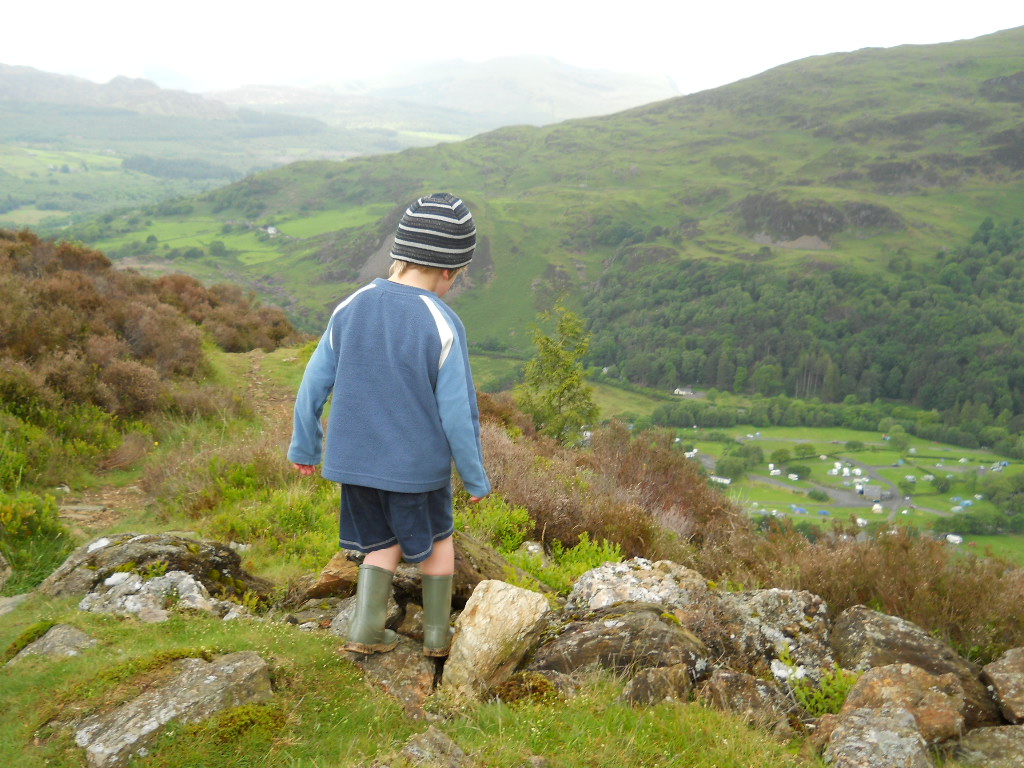
On a holiday in Snowdonia, where we had expected to spend our days mostly riding small steam trains and visiting petting farms, we thought we’d just set off on a walk and see what happened.  7 miles and a considerable ascent and descent later, entire family very happy, child very pleased with himself.  To add to our delight, after we spent the week mixing walking days with steam train and playground days so as not to push our luck, child said the best thing he’d done on the holiday was climbing big hills, and the only regret he expressed was that he hadn’t climbed Snowdon.

So, to everyone who told us we needed to force him to stop using the buggy or he’d never learn to walk far – HA!!

Trying to force a child to do something before they’re ready is nearly always counter-productive.  There are so many examples of this in parenting, potty training probably being the best known one.  Patience please.

Discovered the art of having a holiday with your child, from which you don’t return home needing a holiday from your child.

 Child is amazingly hopeless at amusing himself whilst parents attempt to get ready to go out in morning/relax after day out etc within small confines of holiday accommodation. However, child is not shy – this is a major asset. Cue other children and lots of safe outdoor space visible from window/patio.

Child started school.

My post ‘Starting school before the rest of Europe – a head start or a pressured start?‘ will fill you in some more on my feelings about this, but suffice to say that I worked myself up into unprecedented levels of stress and anxiety over the summer, whilst considering home schooling and/or emigrating.

Am relieved to report, however, that not only is child enjoying school so much that he expressed some displeasure when I announced school would be closing for two weeks over Christmas, but I am no longer at loggerheads with certain key members of staff following unexpected u-turns from both parties (ie: me and them) on the subject of child’s part-time attendance, resulting in a happy union somewhere in the middle.  All is harmony.

I still think they start far too young though…….

Child stopped waking us up at hideous times of the morning.

See ‘How a slice of bread changed my life‘ for more details. So far, this is still working, although I still live in fear that it’s just another phase which will one day end. Also, strangely, the slice of bread is no longer an absolute requirement. Perhaps it was just required to break a habit, or change a situation, and has now served its purpose. I’ve really no idea. I’m too busy enjoying my extra 1 – 2 hours in bed.

Happy new year to all my readers.  Come back in 2012 when normal service (including some more serious posts!) will be resumed.


Ba humbug!

December 20, 2011

While other parent bloggers are writing about Christmas recipes, making decorations with  children, and other pleasantries, I am going to be a complete Scrooge and write about my top three pet hates at Christmas.

1. Chocolate in advent calendars.

Whose stupid idea was this? When I was a child we didn’t have these.   I used to love coming downstairs to open the next door on my advent calendar and see the little picture behind it.  My child has one like this and is equally enthralled with it, and with the visual countdown to Christmas it provides.  When you put chocolates in them it just becomes all about the chocolate and nothing else.  What’s the point?  Why not just buy a normal box of chocolates and give them one every day?  This has ruined what was a lovely Christmas tradition for children.

2. My child being repeatedly asked by other adults, “Have you been good?”

There is no such concept as ‘good’ and ‘bad’ behaviour in our household so I’m not sure my child knows what people mean when they ask him this. He always replies ‘yes’, but with a look of confusion and concern.  Has he measured up to these mysterious adult standards?

I would never threaten my child with the non occurrence of a happy, anticipated event. This would go against all my parenting beliefs.  So I wish other adults would stop assuming otherwise.

My son needs to know that he will receive a visit from Santa no matter what. Nothing he can do will make him a ‘bad’, unworthy person.

3. Christmas music.

It’s bad enough that all the shops and various other public places that have a sound system subject us to the same intensely irritating inane nonsense every year, year in year out, for three months of the year (that’s a quarter of my life I have to spend trying to avoid it), but now I find my child’s school teaching the kids to sing it too.

Furthermore, as my child’s school is a non-faith school I had assumed this was down to political correctness. However, last week I attended the school’s annual visit to the local church and found that they were singing about the birth of Jesus, just in silly songs. If they are going to sing about this then there’s no excuse not to sing some traditional Christmas carols.  Who says children want more modern stuff?  Who decided this?  An adult.  I used to love Christmas carols and I’m sure today’s children would too. They’re timeless.  As with pet hate no.1, this is another needless ‘update’, ruining another lovely Christmas tradition.

Does anyone else have any pet hates at Christmas?  Go on, have a rant!

Having got all this off my chest, I would like to wish all my readers a very merry Christmas.


Please, thank-you, and sorry.

December 15, 2011

“Say please”, “Say thank-you”, and “Say sorry right now!” are words we hear adults saying to children all the time.

Getting our children to say these words is not just about teaching good manners; we really want them to be thoughtful, considerate, grateful, polite, and respectful.  In other words, we want them to mean it.  That’s the difficult bit.  It may be easy enough to get children to parrot certain words, but I’m sure we all get the feeling sometimes that they don’t really mean it, and the words become somewhat hollow if we’re having to prompt them every time.  And do we really want to teach them to say things they don’t mean?

Here’s my take on it:

  • Please

It does irritate me when my child makes me feel like a servant.  “I’m hungry”, or “I want….”  instead of “please can I have” is something I hear everyday. I try to remind him, respectfully, to say please, but I don’t do it every time – it’s irritating having to say it over and over, to me and probably to him too.  More importantly, I try to say please to him, and let him hear me say it to other people – this is how I believe he’ll really learn.  The good news is, he nearly always says please to other people, so something’s working!

  • Thank-you

I always feel slightly ashamed if someone gives my child something and he doesn’t say thank-you. My response is either to say thank-you myself, on his behalf, making sure he hears me, or sometimes I’ll whisper a reminder in his ear.  When I do this, I find he is always very eager to say thank-you, indicating to me that he really just forgot in the excitement of the moment, his focus having shifted quickly to whatever he has received.  I don’t want to make him feel bad about this, but just help him with a gentle reminder.

  • Sorry

This is a tough one. I used to make my child say sorry if he hurt or upset another child, especially when he was in his rather aggressive toddler phase.  I thought it made him take responsibility for his actions.  Then I decided that this wasn’t working. He said the word, but didn’t mean it.  Future behaviour was unchanged.  Worse, he seemed to think it magically cancelled out his previous actions.  He could do whatever he liked then say the magic word and everything would be OK.  Also, forcing him to say sorry when he was upset, having a bit of a meltdown, and clearly didn’t mean it not only felt punitive, but pointless – he wasn’t in any state to be learning anything from this.

Removing him from a situation, helping him to calm down, then talking about the effect of his behaviour on others, and showing him ways to make amends when he is ready, I have found much more effective.

Also, as with please and thank-you, modelling the behaviour you wish to see is always the most effective way of teaching a child. I am not afraid to say sorry to him when I have been snappy, have jumped to a conclusion, or have just made a mistake. I don’t think our children need to see us as perfect, just as human, and ready to admit when we’re wrong.

Now that my child is nearly five, I’m finding these methods are starting to pay off.  He frequently remembers to say please, thank-you or sorry without being prompted, and I can sense that when he says it he really means it.  This makes me feel so proud of him. One genuine unprompted thank-you makes up for fifty forgotten ones, a true expression of regret is a true achievement in terms of a child’s emotional development, and I’m confident there’ll be more and more as he grows, along with his growing sensitivity and ability to empathise with other people.


Sticker crazy!

December 12, 2011

The world truly has gone sticker crazy.  My child comes home from school every day covered in the darned things. Whenever I ask him what they were for his answers range from a kind or helpful thing he did, to everyday things he did, to things he didn’t do.  Last week he got an especially large sticker for ‘looking after a child who had fallen over in the playground’. Sometimes he has a sticker for eating all his dinner (he gets a reward for eating when he’s hungry?!).

What bugs me is that my child is a sensitive boy, always very aware of any distress felt by others around him.  He just is, naturally.  Not because he’s been ‘encouraged’ to be, or ‘taught’ to be.  He sometimes has funny ways of showing it, but he just is.  I’m sure most children are if they’re left to their own devices and not tampered with by adults with stickers. It’s intrinsic, not something that can be taught.  So giving him a sticker for this particular trait is not only unnecessary, it could be counterproductive.

Alfie Kohn writes in his book “Unconditional Parenting”,

“….researchers have found that children who are rewarded for doing something nice are less likely to think of themselves as nice people.  Instead, they tend to attribute their behavior to the reward. Then, when there’s no longer a goody to be gained, they’re less likely to help than are kids who weren’t given a reward in the first place. They’re also less likely to help than they themselves used to be. After all, they’ve learned that the point of coming to someone’s aid is just to get a reward…..No wonder, then, that kids who are rewarded for being helpful end up being less helpful once the rewards stop coming.”

I’d hate to see my child’s natural sensitivity and kindness sabotaged by stickers.

My child has also always been a very good eater with a large appetite.  He will try just about anything (including sand, chalk and snow!). So why introduce rewards for something he’s happy to do anyway? Kohn goes on to write,

“Give children an unfamiliar beverage, and those who are offered a reward for drinking it will end up liking it less next week than kids who drank the same stuff without being offered a reward.”

Last week we went to the library. My child has always loved books. He loves getting new books. When we went to check out our selection we were greeted by a lady that asked if he’d like to join the ‘Bookstart Bear Club’.  Joining the club, which, by the way, I’m sure is an excellent initiative, at least in its objectives, means that my child will receive a stamp every time we take some books out of the library.  When he collects so many stamps he gets a certificate.  Oh, for God’s sake.

Yet again, we’re offering children rewards for something they’re happy to do anyway, risking devaluing the activity, as well as promoting self-interest.  Kohn refers to several studies that show the problems with this,

“….pay children for trying to solve a puzzle, and they’ll tend to stop playing with it after the experiment is over – while those who were paid nothing are apt to keep at it on their own time.”

Joan McCord writes in her study, “Questioning the Value of Punishment“,  in Social Problems, Vol 38, No 2.,

“Studies have demonstrated….that incentives larger than necessary to produce an activity sometimes result in devaluation of the activity being rewarded.”

Kohn concurs,

“The more that people are rewarded for doing something, the more likely they are to lose interest in whatever they had to do to get the reward.”

McCord also goes on to write,

“When a reward is clearly a benefit to the person being promised the reward, rewarding teaches the child to value his or her own benefit.”

OK, I’m over analysing. Granted, much worse things could happen to my child at school than he be given stickers.  It’s just a bit of encouragement and praise?  Maybe, but aside from all the objections I have raised above, which I personally think are fairly compelling, sticker culture creates an environment of conditional approval.  I want my child to feel accepted and loved regardless of whether or not he measures up to adult standards.


Establishing intent

December 8, 2011

When we’re short on patience and our children behave in ways we really wish they wouldn’t, it’s hard not to feel that they’re deliberately provoking us.  OK, sometimes they might be (for which there will of course be an underlying reason), but often I think we attribute worse motives to children’s behaviour than we should.

I find it helps to look at the intention behind the behaviour.  Did your child intend for this to happen?

What was their intention when they pushed the other child out of the way?  Was it for that child to fall and hurt themselves, or were they just intent on getting to that toy first?

Did they intend for something to get broken, or were they just getting over excited?

Did they intend for the milk to go sour, or did they just forget to put it back in the fridge (as kids do)?

Allowing that a child’s intentions may not have been bad does not mean letting them ‘get away with it’. In all these cases, some help or intervention from an adult is needed, and some lessons need to be learned, but we need to keep things in perspective when we choose how to respond.   Usually the child did not set out to break something or hurt someone, but they may have made a bad choice, and something needs to be said and maybe done about this. However, they’re far more likely to listen and learn if you don’t fly off the handle or assume the worst.

One important thing to remember when responding is to take care not to unwittingly attack a child’s character.

The other day I was at the swimming pool with my child.  He joined in with some older children who were having fun splashing each other and pouring water over each other’s heads.  Later, my child, still playing, deliberately splashed another child who was not part of this group and she started to cry.  Her father, understandably perhaps, not knowing about the game that had preceded this, said to my child “That’s not very nice”.

My child clearly did not intend to upset this girl, and so I didn’t feel it was appropriate to rebuke him.  This would be to send him the message that he is a bad person.  It was, however, desirable that he learn something from this situation.  But to say “That’s not very nice” is like saying to a child “You’re not very nice”.   To say “That was really clumsy/silly…” is like saying “You’re really clumsy/silly”.  Far more helpful to point out the result of their behaviour or the effect it has had on someone else.  “She didn’t like that”, then show them how they might make amends, “Let’s see if she’s OK”.  Or, “The milk goes sour when it’s left out.  Do you think you could pop next door and ask if we can borrow some until we’ve been to the shops”.  Another step is to problem solve together, “What could we do to help you remember to put the milk back in the fridge?”.

Adele Faber & Elaine Mazlish sum these steps up really well in their book, “How To Talk So Kids Will Listen & Listen So Kids Will Talk.”

“Express your feelings strongly – without attacking character.

State your expectations.

Show the child how to make amends.

Give the child a choice.

Take action.

Problem-solve.”

Attributing the worst motives to a child’s behaviour can make them feel misunderstood, unfairly treated, and worst of all – bad about themselves.  On the other hand, giving a child a break does not show weakness, it shows that you’re fair, reasonable and understanding, and as such are more able to build a relationship of mutual trust and respect, and so far more likely to succeed in changing behaviour for the better.


Socially acceptable?

December 5, 2011

This week I have been reading with interest about Milli Hill’s (aka The Mule) petition to ask Amazon to stop selling books that advocate the physical abuse of children.  The petition has garnered over seven thousand signatures at the time of writing, as well as considerable press coverage in the States.

In posts on her blog, Milli Hill quotes some shocking passages from one of the books she is objecting to, leading to strings of comments from outraged readers.

Whilst smacking and corporal punishment are still used by many, it has been banned in many countries, and the level of interest Hill’s petition has attracted seems to indicate an encouraging trend towards smacking being socially unacceptable.

However, all this makes me wonder; will there ever come a time when other common parenting practices, now widely used and accepted, will become socially unacceptable?   How much evidence against them does there need to be before we start to turn our backs on certain methods?  How much neuroscience needs to be presented to us before we can ask Amazon to ban books by the likes of Gina Ford?  How many psychological studies before we can ask Channel 4 to stop airing ‘Supernanny’?

Sadly, I think perhaps it’s not just a case of evidence, it’s what speaks to people clearly.  It’s what’s in your face. The idea of physically harming a child is abhorent to many.  But what exactly is it we are objecting to?  The main objection seems to be that it involves inflicting pain on a helpless dependent that looks to us for love and care.

So this leads me to the question, what is there to object to in the use of, for example, ‘time outs’ to control a child’s behaviour?  And I came up with pretty much the same answer.

Physical pain is not the only type of pain.  There’s emotional pain too. Time outs, and its many variations, are used as method for changing a child’s behaviour because many deem them effective.  This perceived effectiveness is the result of pain inflicted on the child.    Gordon Neufeld, Ph.D., and Gabor Mate, M.D. write in “Hold On to Your Kids, “The withdrawal of closeness….is such an effective means of behaviour control because it triggers the child’s worst fear – that of being abandoned.”

Also, many would argue that consistently causing a child emotional pain like this is worse than smacking.  We know the physical pain inflicted by smacking does not cause any lasting physical damage, yet emotional pain, at such a vulnerable age, can have far reaching effects.  So why do we object to physical punishment but not to non physical punishment?  The absence of physical pain or visible injury does not make a punishment OK.

Parents may be starting to turn their backs on some old methods, but the replacements being peddled by parenting ‘gurus’ are not alternatives, they’re just a variation on the same old theme.